
After the Aspen Acres Fire: Wildfire Mitigation, Insurance Claims, Cleanup and Rebuilding in Southern Colorado
- Valor Develops

- Jul 11
- 8 min read
Updated: Jul 14
The Aspen Acres Fire has brought the realities of wildfire, property loss and long-term recovery directly to communities across Southern Colorado.
First reported on June 29, 2026, the fire began in Custer County and rapidly spread into Pueblo County under extremely dry conditions and powerful winds. It grew into one of Colorado’s largest and most destructive wildfires of the year, destroying hundreds of homes and affecting communities across the region.
For property owners, the focus eventually turns to a difficult question: What happens next?
For some families, the answer begins with returning to a property and assessing what remains. For others, it may mean navigating an insurance claim, documenting damage, removing a destroyed structure, excavating and stabilizing the site, and eventually rebuilding.
For property owners whose homes and structures survived, the Aspen Acres Fire is also a powerful reminder that wildfire mitigation and resilient construction should happen before the next emergency.
Valor Development has experience across many of these construction phases—from insurance-related construction claims and demolition to excavation, site preparation, custom home building and wildfire-conscious construction. Warren Gold, CEO Valor Development
Every property is different. But the sequence of decisions matters.
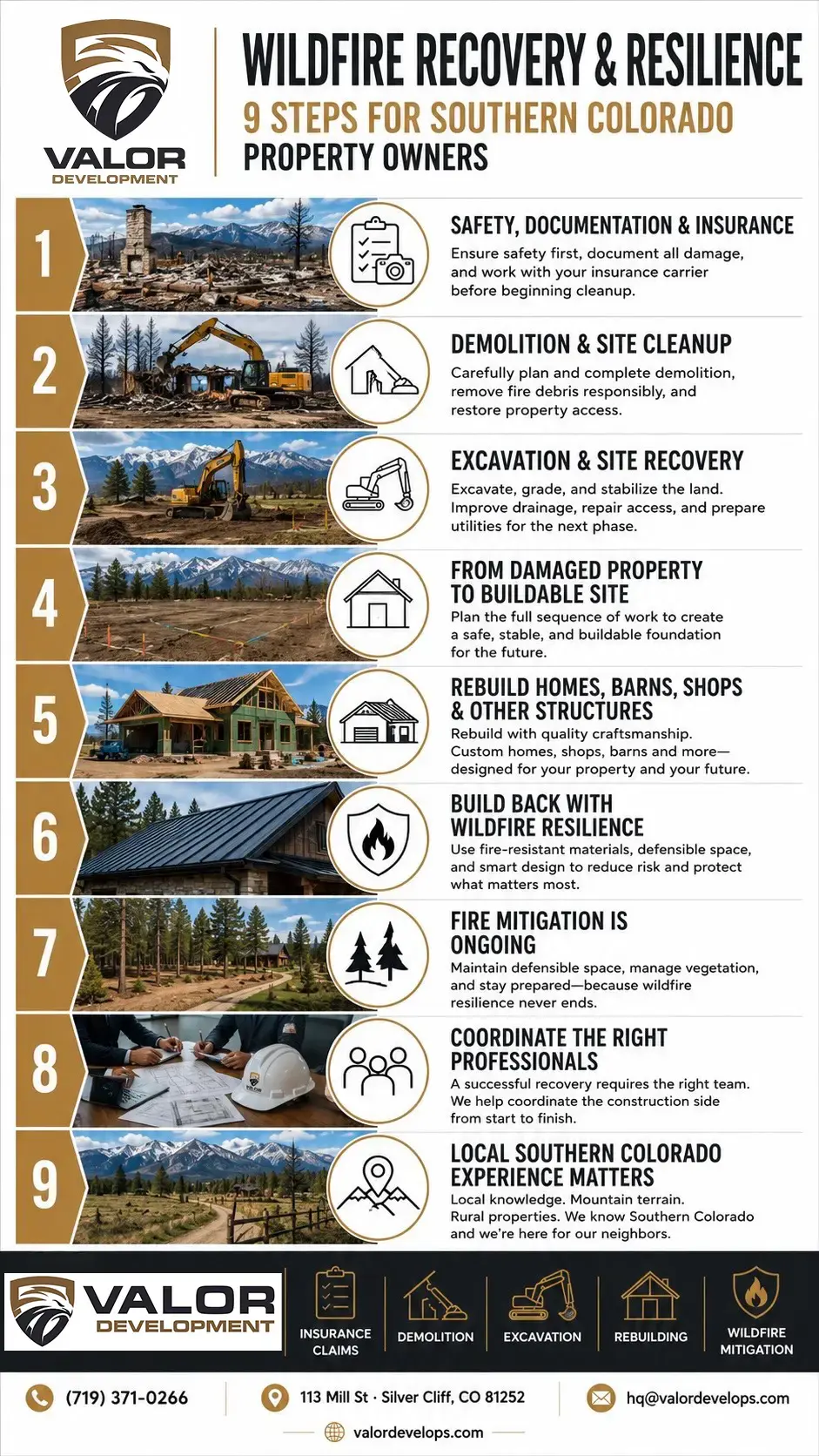
1. Before Cleanup Begins: Safety, Documentation and Insurance
After a wildfire, the natural instinct is to return home and begin cleaning up. That may not be the right first step.
A burned property can remain dangerous long after the flames have passed. Damaged structures may be unstable. Utilities may be compromised. Ash and debris can contain hazardous materials. Fire-damaged trees may fall without warning.
Federal guidance on wildfire preparedness and recovery is available at:
For insured property owners, documentation is also an important part of the recovery process.
Before damaged structures, materials or site features are removed, the loss may need to be photographed, inspected and documented. The insurance carrier may require information to evaluate the damage and determine the scope of covered work.
This is where the physical recovery of the property and the insurance claim can begin to overlap.
Valor Development has experience with insurance-related construction claims and understands the construction side of the process.
Depending on the loss, that may involve:
Documenting visible construction and property damage
Helping define the construction scope associated with the loss
Developing estimates for construction-related work
Identifying demolition, excavation and site-preparation needs
Providing construction documentation and supporting information when appropriate
Addressing additional conditions discovered as damaged materials are removed
Planning the transition from cleanup to reconstruction
A major loss is not always fully understood during the first inspection.
Additional damage may become visible after debris is removed, portions of a structure are opened or access is restored. That makes documentation, sequencing and communication important from the beginning.
Valor does not replace an insurance carrier, adjuster, public adjuster, engineer or attorney. Our role is on the construction side: helping property owners understand the work that may be required and move the property toward recovery. Warren Gold, CEO Valor Development
2. Fire-Damaged Structure Demolition and Site Cleanup
When a home, barn, garage, shop or other structure is severely damaged, demolition may become one of the first major construction phases.
But demolition should be planned—not simply started!
Depending on the property, important questions may include:
Has the damage been properly documented?
Has the insurance carrier completed the necessary inspection?
Is the structure a total loss, or can portions be evaluated for possible reuse?
Does the debris require specialized handling?
What needs to be removed before excavation can begin?
What needs to remain for further evaluation?
What is the long-term rebuilding plan?
The scope of work may include:
Selective demolition
Full structure demolition
Removal of damaged homes and outbuildings
Removal of damaged site improvements where appropriate
Restoration of property access
Clearing of the future building area
Initial grading and stabilization
Wildfire debris should not automatically be treated like ordinary construction debris.
Ash and burned building materials can present health and environmental concerns, and applicable requirements should be understood before removal begins. Warren Gold, CEO Valor Development
The objective is not simply to clear the property as quickly as possible.
The objective is to clear it correctly so the next phase can begin.
3. Excavation and Site Recovery
Once damaged structures and debris have been appropriately addressed, the land itself becomes the focus.
Wildfire can change a site. Vegetation that once slowed runoff may be gone. Burned soils can respond differently to rainfall. Slopes may become more vulnerable to erosion. Roads and driveways may be damaged. Utilities and site infrastructure may need to be evaluated.
Post-fire recovery may require:
Excavation
Clearing
Grading
Drainage improvements
Erosion-control measures
Driveway repair or reconstruction
Construction and emergency access
Utility trenching
Foundation preparation
Site stabilization
This is an important distinction:
Rebuilding after a wildfire is not always as simple as putting a new house exactly where the old one stood.
The entire site may need to be reconsidered.
Could access be improved?
Is there adequate room for emergency vehicles to approach and turn around?
Has drainage changed?
Should the future building location be reconsidered?
Can the site layout reduce future wildfire vulnerabilities?
Are utilities, septic systems, wells or foundations still usable?
The answers depend on the individual property, but these questions are best considered before excavation and reconstruction begin.
Learn more about Valor’s excavation and site-preparation services:
4. From Damaged Property to Buildable Site
Wildfire recovery is rarely one construction project. It is usually a sequence of connected phases:
Insurance claim and documentation ↓
Demolition and debris removal ↓
Excavation and site stabilization ↓
Utilities and infrastructure ↓
Foundation and site preparation ↓
Reconstruction ↓
Long-term wildfire mitigation
Each phase can affect the next. A demolition decision can affect the future building site. Excavation can affect drainage. Driveway design can affect emergency access.
The location of a new structure can affect utilities, excavation costs and wildfire exposure.
The goal is to move the property through a logical progression:
Damaged site →
Safe site →
Buildable site →
Rebuilt property
Thinking about the entire property early can help avoid treating every phase as an isolated project.
5. Rebuilding Homes, Barns, Shops and Other Structures
A destroyed home is not simply a lost building. It may represent decades of memories, work and investment. The same can be true of a barn, agricultural building, garage or workshop that played an important role in daily life.
Every property owner’s rebuilding decision will be different. Some may want to rebuild something similar to what was lost.
Others may choose a different floor plan, structure type, location, size or construction approach.
A wildfire recovery project may involve:
Custom homes
Replacement homes
Garages
Workshops and shops
Barns
Agricultural structures
Post-frame buildings
Steel buildings
Other outbuildings
The right solution depends on the property, the owner’s goals, the available budget, the insurance claim where applicable, current building requirements and the realities of constructing in rural Southern Colorado.
Insurance, demolition, excavation, utilities, foundations and vertical construction should not be treated as completely disconnected processes. Decisions made during the first phases of recovery can affect the cost, schedule and feasibility of everything that follows.
Learn more about building a custom home with Valor:
6. Building Back With Wildfire Resilience in Mind
No building can be made completely wildfire-proof. But thoughtful design, materials, site planning and ongoing property maintenance can help reduce vulnerabilities.
Wildfire resilience is not one product or one construction detail. It is a system.
The structure, surrounding vegetation, access, topography, materials and ongoing maintenance all interact.
Important considerations may include:
Defensible space around structures
Vegetation management
Removal of dead or hazardous trees where appropriate
Emergency vehicle access
Driveway width and turnaround areas
Fire-resistant roofing and exterior materials
Ember-resistant vents and vulnerable openings
Decks and attached structures
Placement of combustible materials
Site layout and structure placement
Applicable wildfire-resiliency and building requirements
The Colorado State Forest Service provides guidance for homeowners on defensible space and reducing wildfire risk around homes and property:
Home Ignition Zone checklists are available here:
The Insurance Institute for Business & Home Safety also provides research and guidance on reducing a structure’s vulnerability to wildfire:
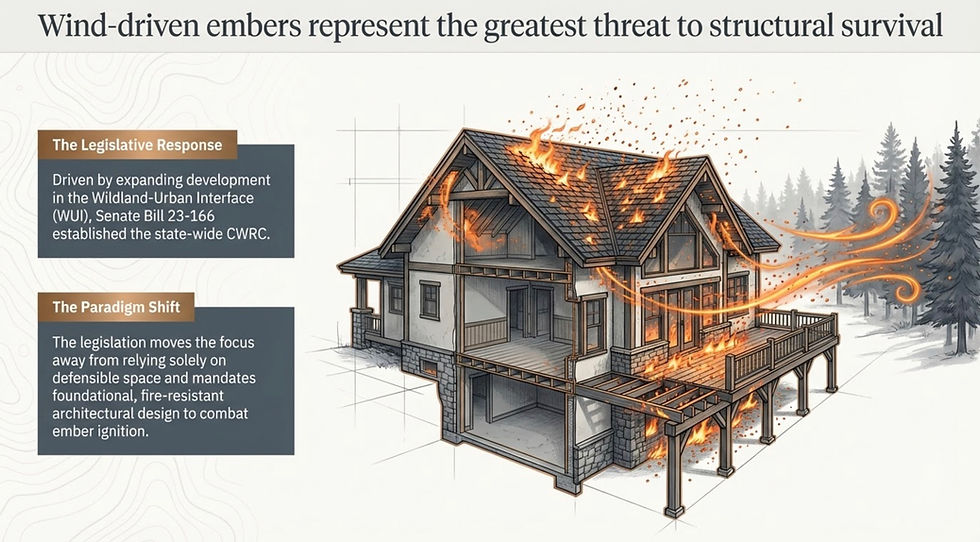
Valor has also published a dedicated guide to Colorado’s evolving wildfire-resiliency requirements and what they may mean for homeowners and builders in the Westcliffe and Silver Cliff area:
Rather than repeating that entire discussion here, property owners planning to rebuild or begin new construction can use that guide for a deeper look at the Colorado Wildfire Resiliency Code and the changing regulatory environment.
7. Fire Mitigation Is Not Only for Properties That Burned
For every property destroyed by wildfire, many more property owners are asking:
What can we do now?
That is an important question.
Depending on the property, wildfire mitigation may involve:
Removing combustible vegetation near structures
Clearing brush and accumulated fuels
Addressing dead or hazardous trees with qualified professionals
Improving defensible space
Clearing around homes, barns and outbuildings
Improving driveways and emergency access
Addressing drainage and erosion concerns
Using excavation or grading to improve portions of a site
Planning future structures with wildfire exposure in mind
Not every type of mitigation work is performed by the same contractor. Forestry work, hazardous-tree removal and other specialized services may require qualified professionals.
But mitigation should not be viewed as a one-time project.
Vegetation grows back.
Trees die.
Roads deteriorate.
New structures are added.
Combustible materials accumulate around homes and outbuildings.
Wildfire mitigation is an ongoing part of owning property in wildfire-prone areas of Colorado.
8. One Property May Require Several Different Professionals
Wildfire recovery can become complicated quickly.
A single property may involve:
County officials
Emergency management agencies
Insurance carriers and adjusters
Engineers
Environmental specialists
Hazardous-material professionals
Demolition contractors
Excavation contractors
Utility providers
Well and septic professionals
Electricians
Plumbers
Builders
Specialty trades
For the property owner, one of the greatest challenges can be understanding the sequence.
What should be documented before anything is removed?
What does the insurance carrier need?
What must happen before demolition?
Can an existing foundation be reused?
When should excavation begin?
How has the fire affected drainage?
What permits are required?
What should happen before a new foundation is installed?
There may not be one company responsible for every part of the recovery process.
But having an experienced construction team involved early can help property owners understand how one phase affects the next.
9. Local Southern Colorado Experience Matters
Building and rebuilding in Southern Colorado is different from building in a typical suburban development.
Properties in Custer, Pueblo, Fremont and Huerfano counties may involve:
Mountain and rural access
Long driveways
Steep or difficult terrain
Wells
Septic systems
Long utility runs
Remote building sites
Snow and seasonal weather
Wildfire exposure
Material and equipment logistics
Local permitting requirements
Communities including Westcliffe, Silver Cliff, Wetmore, Rye, Beulah, Colorado City and surrounding rural areas each have their own geography and construction realities.
After a major wildfire, those challenges can become even more significant.
Road access may be damaged.
Utilities may need repair.
Vegetation loss may change drainage.
The site may require cleanup and stabilization before normal construction can begin.
Local experience matters because rebuilding is not simply about the structure.
It is about understanding the entire property.
Planning the Next Step After Wildfire Damage
The Aspen Acres Fire is a devastating reminder of the wildfire risk facing Southern Colorado.
For families who lost homes and structures, recovery will take time. For those returning to damaged properties, the next steps may involve insurance claims, documentation, demolition, excavation and rebuilding.
For property owners whose homes were spared, this is a time to take mitigation and preparedness seriously.
Valor Development has experience with insurance-related construction claims and provides construction services that can support multiple phases of property recovery and rebuilding, including:
Insurance-related construction claim experience
Demolition
Excavation
Site preparation
Custom home construction
Replacement homes
Barns and agricultural structures
Shops and garages
Post-frame and steel buildings
Wildfire mitigation-related site work
Every property is different.
The first step is understanding the damage, the site, the insurance and documentation requirements, the applicable building requirements and the right sequence of work.
Ready to Take the Next Step?
Whether you are recovering from wildfire damage, navigating an insurance-related construction claim, preparing a damaged site for rebuilding, or taking steps to better protect your property before the next wildfire, Valor Development is here to help you understand the construction path forward.
From demolition and excavation to site preparation, rebuilding and wildfire mitigation-related site work, every property requires a thoughtful plan and the right sequence of work.
Let’s talk about your property and what comes next.


Comments