.png)
New Colorado Wildfire Resiliency Code Is Coming: CWRC (2026)
Updated: Mar 21
What Mountain Property Owners Need to Know Before Building in Southern Colorado 🦅🔥🏔️
Construction across southern Colorado is about to change in a major way.
Beginning in 2026, the Colorado Wildfire Resiliency Code (CWRC) will become the new baseline building standard for homes constructed in wildfire-prone areas across the state.
For rural counties like Custer County, Huerfano County, Fremont County, and Chaffee County, the change will affect how homes are designed, built, and permitted moving forward.

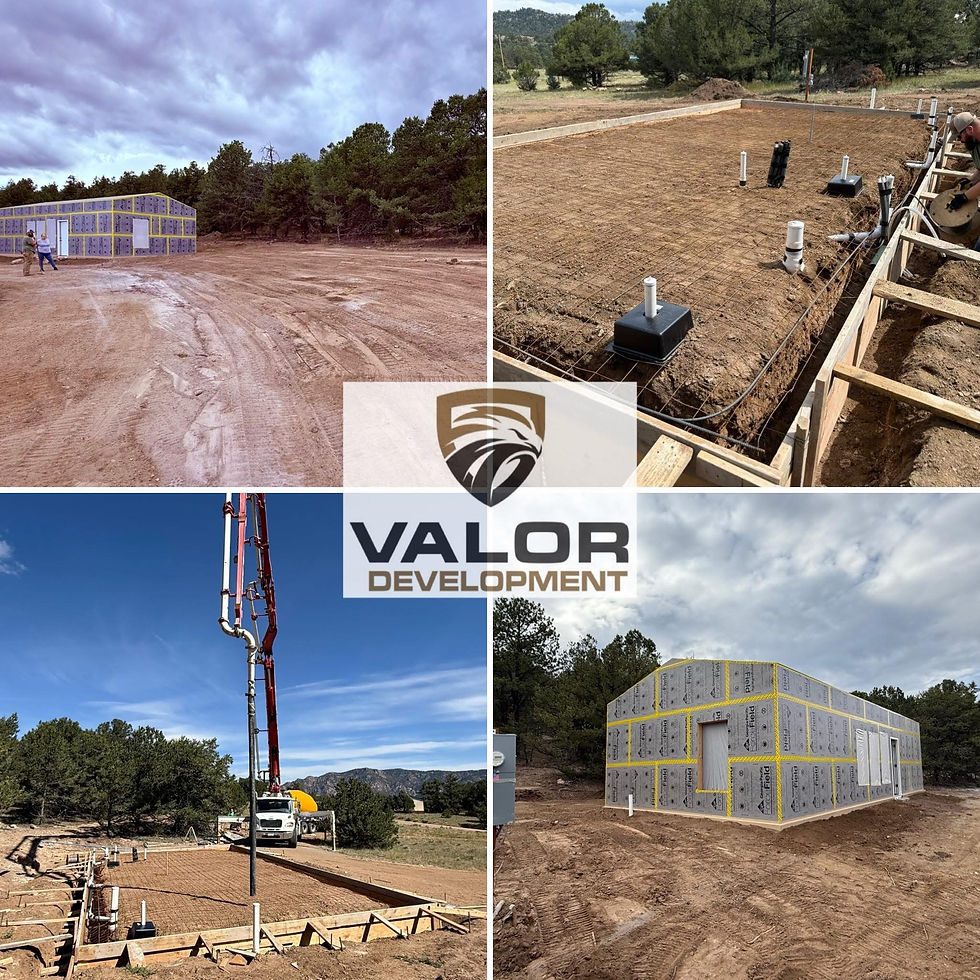
At Valor Development, we are already preparing for these changes while actively building projects throughout southern Colorado — including this new two-story shop structure currently rising near Rosita in Huerfano County. Warren Gold, CEO Valor Development
As wildfire risk continues to shape building practices across the American West, the CWRC represents one of the most significant construction policy shifts Colorado has seen in decades.
The Two Critical Deadlines Builders Must Know
The Colorado Wildfire Resiliency Code was established under Senate Bill 23-166, passed by the Colorado legislature to reduce wildfire risk in the state’s expanding wildland-urban interface (WUI).
Two key deadlines define the rollout.
April 1, 2026 — Local Adoption
All jurisdictions located within wildfire-prone areas must adopt the CWRC as their minimum building standard.
This includes counties across southern Colorado where rural development meets forested or grassland environments.
For many mountain communities, the adoption process is already underway.
July 1, 2026 — Enforcement Begins
Most counties are expected to begin full enforcement of CWRC standards for new building permit applications submitted after July 1, 2026.
This means new homes, accessory structures, and many rural construction projects will need to meet updated wildfire-resistant building requirements.
For property owners planning to build in 2026 or beyond, understanding these changes early is essential.
What the Wildfire Resiliency Code Actually Changes
The CWRC focuses on reducing the likelihood that structures ignite during wildfire events.
Instead of relying only on defensible space around a home, the code emphasizes fire-resistant building design and materials.
Key construction elements affected include:
Exterior Materials
Many homes built in wildfire zones will need to incorporate:
Fire-resistant siding
Non-combustible roofing systems
Ignition-resistant soffits
Ember-resistant venting systems
These materials are designed to prevent wind-driven embers from igniting structures.
Windows and Openings
The CWRC encourages stronger window systems that reduce heat transfer during wildfire exposure.
Typical recommendations include:
Tempered glass windows
Dual-pane glass assemblies
Fire-resistant framing systems
These upgrades improve both safety and long-term durability.
Decks and Attached Structures
Decks, porches, and attached structures are common ignition points during wildfires.
Under CWRC guidance, builders may be required to use:
Ignition-resistant decking materials
Fire-resistant structural framing
Enclosed or protected underside deck systems
These improvements reduce ember intrusion beneath homes.
Why This Matters for Rural Colorado
Southern Colorado counties are some of the most wildfire-exposed regions in the state.
Communities throughout:
Custer County
Huerfano County
Fremont County
Pueblo County
Chaffee County
sit within the Wildland-Urban Interface, where homes and structures meet forest and grassland environments.
According to the Colorado State Forest Service, wildfire risk continues to increase as more people build in mountain terrain.
More information about wildfire mitigation can be found here:
Colorado State Forest Service
Colorado Wildfire Resiliency Code overview
These changes are designed to reduce structural loss during wildfire events and improve community resilience.
Building Ahead of the Code
At Valor Development, we are already incorporating many wildfire-resistant construction practices into our projects.
This includes steel building systems, ignition-resistant materials, and site planning strategies that improve fire resilience.
The two-story shop currently under construction near Rosita reflects this forward-thinking approach.
Steel framing, durable materials, and thoughtful site design provide structural longevity while reducing wildfire risk.
For property owners building in rural Colorado, the best approach is not simply meeting the code — but building beyond it.
Why Timing Matters for Property Owners
If you are planning to build in southern Colorado, the upcoming CWRC deadlines may affect your project timeline.
Depending on permitting schedules and county adoption timelines, projects submitted before July 2026 may be permitted under existing building requirements.
Projects submitted afterward will likely be required to meet CWRC standards.
That makes early planning and experienced guidance critical.
Working with a contractor familiar with both current regulations and upcoming changes can help avoid costly redesigns later.
Veteran-Led Construction Across Southern Colorado
Valor Development is a service-disabled veteran-owned construction company based in Silver Cliff, Colorado.
We specialize in rural construction and mountain development projects across:
Custer County
Huerfano County
Fremont County
Pueblo County
El Paso County
Chaffee County
Our team brings decades of combined construction experience to projects including:
Custom mountain homes
Steel buildings and shops
Barns and agricultural structures
Rural property development
Off-grid construction planning
Building in Colorado’s mountain terrain requires experience, precision, and long-term planning.
Planning a Mountain Build in 2026 or Beyond?
If you are considering building a home, shop, or rural structure in southern Colorado, now is the time to begin planning for upcoming wildfire resilience requirements.
Understanding how CWRC standards will impact materials, design, and permitting can save time and money during the construction process.
Valor Development is ready to help property owners navigate the evolving construction landscape in Colorado.
📞 (719) 371-0266
Valor Development
Veteran-Owned Construction in Southern Colorado
Build it right.
Build for Colorado.
Build with Valor.


Comments